
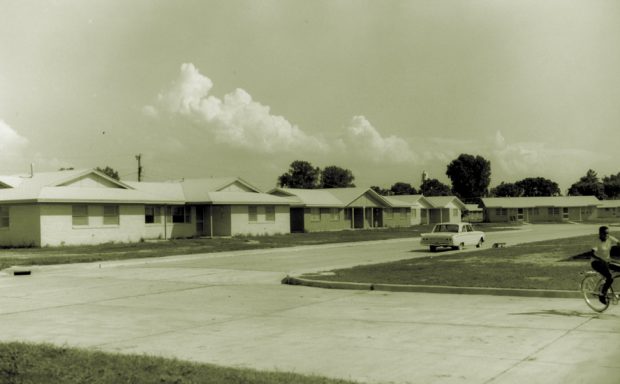
We are a Public Housing Authority. We were created to provide housing for U.S. citizens in Osceola, Arkansas. We were the twenty-first Public Housing Authority created and developed in Arkansas. We are, in terms of public housing units the eleventh largest Housing Authority in the state.
We expanded and evolved from the first two neighborhoods, Hyatt and Northgate (Bronx and Rosenwald) which were developed in the first part of the 1960’s to four neighborhoods with the development of Eastgate in the mid 1960’s and then Shirley Drive and Chestnut Circle in the early 1970’s. East Hale, our adults neighborhood was also developed in the early 1970’s.
We lease and manage 355 units of housing in four separate neighborhoods covering more than 40 acres of land. With an average resident population of 750, we provide homes for approximately 10% of Osceola’s total population. Our residents work in restaurants, factories, health-care organizations and myriad other businesses in the Osceola and greater Mississippi County area. They attend schools and churches in Osceola; they shop at local businesses, use local services and contribute in the same way, to the economy, health and vitality of the City that every other citizen does.
OHA’s day-to-day and long-term operations and planning are the responsibility of a staff of fourteen full-time employees. Nine employees are in the Maintenance Department; five are in the Administrative Department. Six of our staff are OHA residents, up from zero in early 2013. We also have a long-time resident serving on OHA’s Board of Commissioners. Speaking of Commissioners, OHA’s operations and planning are governed and guided by a five-member Board of Commissioners. The five Commissioners, all volunteers, meet monthly to review and monitor agency finances, planning and overall performance. Although the agency keeps fairly typical business hours, we are, in fact available and on-call 24 hours a day, seven days a week, 365 days a year. You can contact us here [link to contact info].
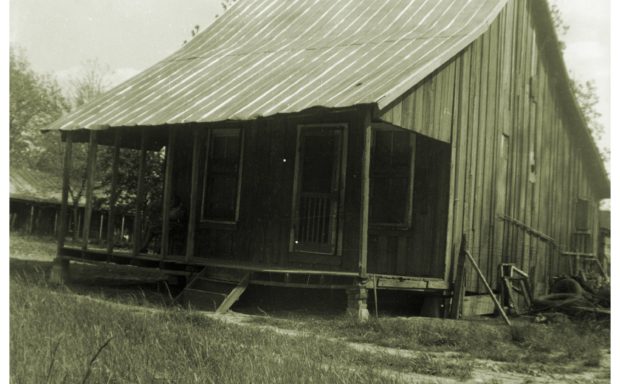
As the Great Depression deepened in the early
1930’s, President Roosevelt, along with Congress enacted a
sweeping set of initiatives to combat the many ills of the
Depression, popularly known as the New Deal. One of the
many agencies created to combat rampant unemployment and
suffering, and generate economic recovery was the Public
Works Administration, or PWA. The National Industrial
Recovery Act of 1933 directed the PWA to develop a Housing
Division, that would create a program for the
“construction, reconstruction, alteration, or repair under
public regulation or control of low-cost housing and slum
clearance projects…” by providing provide
low-interest loans to public or private groups to fund the
construction of low-income housing (the first LHA’s, or
Local Housing Agencies). A novel and ground-breaking
concept; but too few qualified applicants took advantage
of the program.
This led, in turn to the PWA Administrator, via the mandate of the 1934 National Housing Act directing the PWA Housing Division to construct public housing on its own, which led to the development, between 1934 and 1937 of 52 publicly funded housing agencies across the U.S., Puerto Rico and the Virgin Islands. It also was the basis in part for the Housing Act of 1937, which established publicly-funded low-income housing as a permanent Federal program. That program was the responsibility of the United States Housing Authority (USHA), which was created as part of the 1937 Act to manage subsidies to local agencies for an initial period of two years. The USHA replaced the temporary PWA Housing Division, and oversaw a significant increase in the annual housing units developed.
As part of President Truman’s Fair Deal package, The Housing Act of 1949, among other housing stimulus and financing elements set as a goal the construction of 810,000 public housing units in ten years.
As for Osceola Housing Authority – it began as a plan for public housing development in the City between two entities; the Osceola Housing Authority Board of Commissioners and the City of Osceola. On July 9, 1958 the two entities signed a Cooperative Agreement as a local housing agency that defined the development and financial operation of the Housing Authority of the City of Osceola, its official title.
The Agreement allowed for the pursuit of funding through
the USHA and/or other venues, and specified an initial
development of approximately 150 housing units.
On
____________ Osceola Housing Authority executed an Annual
Contributions Contract (ACC) with ___________ to provide
funding for the development envisioned in the Cooperative
Agreement. Planning got underway almost immediately.
Since an important element of the national drive to establish publicly-funded housing was the elimination of slums, the Agreement envisioned goals for replacement of “…insanitary housing…” with safe, clean, sanitary and affordable housing for low-income families and individuals, which were documented throughout development and construction.
The first development included the Hyatt (Bronx) and Northgate (Rosenwald) neighborhoods. The Hyatt included 60 residences in single-story duplex buildings, in a quiet, semi-private and distinct neighborhood. The Northgate included 86 residences, again in a quiet, semi-private and distinct neighborhood setting.
The design of each neighborhood was in direct and stark
contrast to the prevailing design concepts for public
housing. Featuring large common and play areas, large
residence lots and the potential (realized over time) for
mature trees and landscaping, they both represented an
advancement in public housing development theory.
Construction
initiated in 1960 and completed in 1962, although demand
was strong enough that occupancy began some time before
completion.
Development and expansion continued. In 1964, ground was
broken for the Eastgate neighborhood (70 residences) and
the Northgate Addition (30 residences), which created
Nickerson and Childress Circles and adjoined the Northgate
neighborhood. In 1970, construction began on the Shirley
Drive and Chestnut Circle neighborhood (50 residences) and
the Eastgate Addition (41 residences), which expanded the
Eastgate neighborhood north on Broadway to Semmes.
Finally, the East Hale neighborhood (20 units) was
developed at the east end of Hale Avenue in the mid
1970’s, bringing OHA to a total of 355 residences under
lease.
East Hale neighborhood was converted to an
Adult Enclave (55 years and older) in late 2013.
OHA’s
Administration office was originally sited in the Hyatt
neighborhood. In 2010 all administrative functions were
relocated to the new Administration building in the
Northgate neighborhood.
We are a not-for-profit entity regulated by all relevant
State and Federal Rules [link to The Rules That Guide Us]
that govern any like organization.
We are a public
entity, which means that our Commission and Planning
Meetings are open, subject to certain confidentiality
privileges; we are subject to and compliant with Freedom
of Information Act requests; and, as a federally
subsidized organization, we must comply with regulations
regarding bidding, contract awards, procurement and other
activities that include expenditure or commitment of
federal funds.
We are expected to operate and maintain our business exclusively on our revenues and federal funds.
We are a significant and constructive member of the larger
community that is the City of Osceola. We are a consumer
of the City’s resources and, at the same time a
contributor to its economy and vitality, just as with any
other community within the City. In recognition of those
two facts, what we WANT to be “What We Are”, in all
possible aspects is a net contributor to the City’s, and
the larger region’s economy and vitality.
We are not
a Section 8/Housing Choice Voucher/”HUD” housing provider.
We are not emergency housing providers. We are a Public
Housing Authority.
We are a Public Housing Authority. We receive federal funds, in the form of operating subsidies and modernization grants to operate, maintain and improve our housing portfolio, as well as our physical operating plant. These funds derive from the U.S. Department of Housing and Urban Development (HUD).
As such, we are, in addition to being governed by all relevant Local, State and Federal laws and regulations, responsible for adhering to a broad and comprehensive set of Federal regulations that are specific to publicly funded low-income housing.
Title 24 of the Code of Federal Regulations (most often
referred to as “24 CFR”) is the source of those
regulations. So; to navigate to the most relevant
regulations one would look for: 24 CFR Subtitle B, Chapter
IX, Parts 900 through 970. You can find it here:
GPO – 2015 24 CFR Subtitle B, Chapter IX, Parts 900
through 970
You can also find information about and links to
these regulations at HUD’s website:
HUD – Code of Federal Regulations Applicable to
Programs Administered by Public and Indian Housing
Within Chapter IX, Parts 960 through 966 are perhaps most relevant to applicants, and current and former residents. These parts define the following activities, policies and processes:
We depend on and are very responsive to both explicit and implicit guidance gained during our frequent interactions with HUD’s area Field Office (we just call it “HUD Little Rock”), which is a part of HUD’s Region VI, headquarters in Ft. Worth, TX. If you need to contact HUD Little Rock, you can find the information here, on HUD’s website:
HUD – Contact Local Arkansas Offices
Finally, and most significantly, we are guided by the oversight and input from our Board of Commissioners. Look at it like this:
All of this, then represents the total amount of directive, guidance and other inputs that, when taken together can be called the rules that guide us.
Our continuing job is to receive and comprehend all that input, and to synthesize it into a coherent, compliant operating philosophy that accommodates the needs of our residents in both the short and long term.
We are a Public Housing Authority. Our mission is to
provide the highest quality housing possible to those who
have a need and qualify. In a larger sense, we work to be
one of many things that help those that live with us
progress towards their personal life goals; our part in
that is to ensure that they have a clean, safe, highly
sustainable home in a good environment with excellent
support services, all of which are focused on helping them
on their path.
By doing that consistently and well,
we further the goals of the American public, our ultimate
employer.
We are a Public Housing Authority. So, first and foremost, we help by providing safe, sanitary, highly efficient and respectable housing for low- and very-low income U.S. citizens who choose to reside in the City of Osceola. We prioritize our efforts to provide housing to working families and individuals, a group that comprises over 50% of our households; and to the elderly and disabled, a group that comprises a significant number of that remaining 50% of households. This latter group most often relies on a fixed income; all our residents are helped by the availability of the housing we provide, which offers an affordable option to the broader area rental market. Using our monthly Operating Budget funding, we partially subsidize our rents, allowing our residents to control their housing costs and thus more ably manage their other financial and life responsibilities.
There is another way we help. It isn’t policy so much as an organizational philosophy. We provide an opportunity for citizens to access “but-for” housing. That means that, for a not-insignificant fraction of the low-income population of Osceola, but for us and the housing opportunities we offer, there would be no other realistic, let alone high-quality housing options available to them. One important part of that: we have as residents a large number of young adults who, but for us would not have that opportunity to get that first place of their own. This means they are also learning for the first time how to manage their independent lives, often on limited means, which often stem from their first forays into participating in the employment economy. Which means learning to budget, to manage transportation and a household and to function as an adult part of a community. We help with all that for as long as they live with us. As importantly, we help by providing quality homes for our elderly and disabled residents, along with all the support services – maintenance and repair, landscaping and grounds maintenances, and full administrative services – so that they can maximize the quality of their independent lives in a setting that they would probably not otherwise find available on the broader rental market. But for us, those opportunities just wouldn’t be available.
Finally – another part of our organizational philosophy is
to be respectful of our ability, and obligation to help by
providing that often critical second chance housing
opportunity to those who may have faltered in the past.
Public
housing is most often, and rightly perceived as a
“stepping stone”; a waypoint on the path towards
self-sufficiency, fulfillment and empowerment. Many times,
however we also offer that “step back up” onto the path
for those who may have experienced setbacks or hardships
that make it difficult to secure housing on the broader
rental market. We help by providing a safe base from which
to find and get back on that path for those who are
sincere about doing so.
We are a Public Housing Authority. At the same time, we
are a not-for-profit business. We serve an important
public good; and yet, we must balance our desire to
altruistically serve that good with our responsibility to
our bottom-line imperative.
The operation of OHA is
subject to numerous performance measurements. These
measurements allow HUD to quantify the effectiveness of
our operations in order to judge the health and wellbeing
of the organization as a going concern. These measurements
include:
This question is possibly the easiest, or at least the
most straightforward one to answer of all. There are
numerous studies and other investigations showing the need
for affordable, low-income housing (just look here). At
the end of the day though, we are needed, quite simply,
because the American people have decided – repeatedly –
that access to high-quality, affordable housing for those
among us who need it most, is something upon which our
society places much value. It is something that the
American people have voted to fund and support, time and
time again. It is one of our ideals as a society.
Osceola
Housing Authority is a physical manifestation of that
public value. We serve the housing needs of low-income
citizens in order to fulfill the will of the American
people. That is why we are needed.
On a personal
note: we are also desperately needed as a safe, stable,
affordable and secure housing option for low-income, young
adult parents, and especially their children.